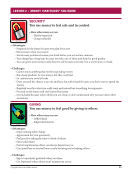
The cards can be used as a quick icebreaker to initiate conversation about money. They are not meant
to be a clinical diagnostic tool or prescriptive assessment to label youth or dictate a specific action plan.
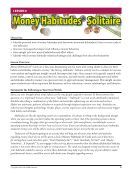
That being said, when students play Money Habitudes® Solitaire, it can easily lead to serious conversations
and important insights relative to a wide range of money-related issues, ranging from basic financial
literacy to dealing with impulsive spending. Since money is frequently equated with power, love, fear,
status, control, acceptance, success, security, and self-esteem, understanding a person’s habits and
attitudes related to money can open new ways to approach money management, and also open windows
into many life issues.
The Money Habitudes II® Cards are very flexible. They can be used with individuals or groups as a
stand-alone activity or as an effective complement to other financial or life skills programs. A variety
of youth-serving professionals, including teachers, youth leaders, and counselors, find the Money
HabitudesII® Cards excellent tools to use with young people. Feel free to adapt their use to meet the needs
of your youth, keeping in mind the cards are most effective in a positive, interactive, hands-on experience
where teens can discover and explore their own money habitudes.
Teaching Money Habitudes®2
Each lesson in the Money Habitudes® 2 Instructor’s Manual is designed to be taught in 45 to 90 minutes.
The lessons and card game can be used in many different ways:
• In either highly interactive or more reflective settings
• As a stand-alone one-hour activity (Money Habitudes II® Cards)
• In conjunction with any curriculum on financial literacy and money management
• With both small and large groups in classrooms and community programs
• By counselors and therapists working with individuals
• To initiate informal conversation or as a structured class with assignments
v Copyright ©2014 The Dibble Institute
to be a clinical diagnostic tool or prescriptive assessment to label youth or dictate a specific action plan.
That being said, when students play Money Habitudes® Solitaire, it can easily lead to serious conversations
and important insights relative to a wide range of money-related issues, ranging from basic financial
literacy to dealing with impulsive spending. Since money is frequently equated with power, love, fear,
status, control, acceptance, success, security, and self-esteem, understanding a person’s habits and
attitudes related to money can open new ways to approach money management, and also open windows
into many life issues.
The Money Habitudes II® Cards are very flexible. They can be used with individuals or groups as a
stand-alone activity or as an effective complement to other financial or life skills programs. A variety
of youth-serving professionals, including teachers, youth leaders, and counselors, find the Money
HabitudesII® Cards excellent tools to use with young people. Feel free to adapt their use to meet the needs
of your youth, keeping in mind the cards are most effective in a positive, interactive, hands-on experience
where teens can discover and explore their own money habitudes.
Teaching Money Habitudes®2
Each lesson in the Money Habitudes® 2 Instructor’s Manual is designed to be taught in 45 to 90 minutes.
The lessons and card game can be used in many different ways:
• In either highly interactive or more reflective settings
• As a stand-alone one-hour activity (Money Habitudes II® Cards)
• In conjunction with any curriculum on financial literacy and money management
• With both small and large groups in classrooms and community programs
• By counselors and therapists working with individuals
• To initiate informal conversation or as a structured class with assignments
v Copyright ©2014 The Dibble Institute