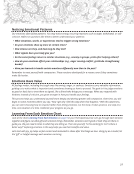
Lesson 1 Self-Soothing
8
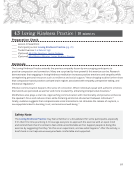
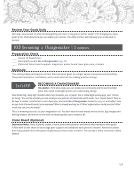
1.3 Focused Breathing |9 minutes
Preparation Check
_____Lesson 1 PowerPoint
_____Participant Journal: Focused Breathing (pg. 3)
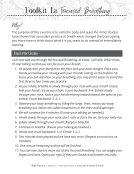
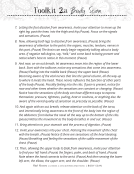
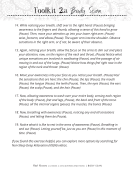
_____Toolkit Exercise: 1.a Focused Breathing
_____Video: How Important is Breathing at the Plate? (54 seconds), linked in the Lesson 1 PowerPoint
_____(Optional) Mind Matters Minutes: Focused Breathing, Me &My Emotions: Focused Breathing Exercise
Rationale
This section helps participants understand the importance of staying calm during challenges, a core part of
resilience, and equips them with tools to regulate their nervous system. These skills are reinforced throughout
the course, with lessons beginning and ending with a self-soothing exercise when time allows. Focused
Breathing is the first self-soothing technique taught, and its benefits are well documented: regular practice
increases calmness, reduces reactivity, and enhances openness and empathy.9 Because the human brain
evolved as an “anticipation machine” focused on detecting threats, individuals with numerous adverse
childhood experiences often develop an overactive threat detection system.10 In modern life, this constant
scanning can create chronic stress that eventually affects mental and physical health.11 Focused Breathing
interrupts this cycle by providing a predictable, calming rhythm that signals safety to the brain, offering a
simple but powerful tool for self-soothing and emotional regulation.12
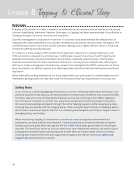
Safety Note
At times, individuals may feel discomfort when hearing deep breathing, possibly triggering past memories
or sensations. If you notice someone struggling, offer them permission to not participate. If your setting
has a window, suggest they focus on watching the clouds or the rustling of the tree leaves. Alternatively,
they may prefer taking a break outside the room. It’s crucial that anyone who wants to excuse themselves
can do so. Later, they’ll have numerous other self-soothing methods to explore. Additionally, always ensure
you have permission before touching someone.
Instructor Note: When introducing the Mind Matters exercises, participants may have questions about
whether some of the exercises are forms of meditation. It’s important to address these concerns, as some
individuals may have negative associations with meditation or confuse these activities with religious practices.
The Mind Matters exercises are rooted in brain science and are not tied to any specific religion or philosophy.
For instance, consider Focused Breathing. This exercise emphasizes breath control to enhance brain function.
Research shows that deep breathing has a calming effect: it signals the body to slow stress-producing
hormones and triggers a relaxation response.12 Focused Breathing shares similarities with techniques used by
athletes to improve performance. For example, basketball players often take deep breaths before shooting
free throws, and public speakers use breathwork to calm nerves before going on stage. These are natural
methods for self-calming before facing life’s challenges. Anyone can benefit from Focused Breathing because it
is a practical exercise grounded in research and science.
8
1.3 Focused Breathing |9 minutes
Preparation Check
_____Lesson 1 PowerPoint
_____Participant Journal: Focused Breathing (pg. 3)
_____Toolkit Exercise: 1.a Focused Breathing
_____Video: How Important is Breathing at the Plate? (54 seconds), linked in the Lesson 1 PowerPoint
_____(Optional) Mind Matters Minutes: Focused Breathing, Me &My Emotions: Focused Breathing Exercise
Rationale
This section helps participants understand the importance of staying calm during challenges, a core part of
resilience, and equips them with tools to regulate their nervous system. These skills are reinforced throughout
the course, with lessons beginning and ending with a self-soothing exercise when time allows. Focused
Breathing is the first self-soothing technique taught, and its benefits are well documented: regular practice
increases calmness, reduces reactivity, and enhances openness and empathy.9 Because the human brain
evolved as an “anticipation machine” focused on detecting threats, individuals with numerous adverse
childhood experiences often develop an overactive threat detection system.10 In modern life, this constant
scanning can create chronic stress that eventually affects mental and physical health.11 Focused Breathing
interrupts this cycle by providing a predictable, calming rhythm that signals safety to the brain, offering a
simple but powerful tool for self-soothing and emotional regulation.12
Safety Note
At times, individuals may feel discomfort when hearing deep breathing, possibly triggering past memories
or sensations. If you notice someone struggling, offer them permission to not participate. If your setting
has a window, suggest they focus on watching the clouds or the rustling of the tree leaves. Alternatively,
they may prefer taking a break outside the room. It’s crucial that anyone who wants to excuse themselves
can do so. Later, they’ll have numerous other self-soothing methods to explore. Additionally, always ensure
you have permission before touching someone.
Instructor Note: When introducing the Mind Matters exercises, participants may have questions about
whether some of the exercises are forms of meditation. It’s important to address these concerns, as some
individuals may have negative associations with meditation or confuse these activities with religious practices.
The Mind Matters exercises are rooted in brain science and are not tied to any specific religion or philosophy.
For instance, consider Focused Breathing. This exercise emphasizes breath control to enhance brain function.
Research shows that deep breathing has a calming effect: it signals the body to slow stress-producing
hormones and triggers a relaxation response.12 Focused Breathing shares similarities with techniques used by
athletes to improve performance. For example, basketball players often take deep breaths before shooting
free throws, and public speakers use breathwork to calm nerves before going on stage. These are natural
methods for self-calming before facing life’s challenges. Anyone can benefit from Focused Breathing because it
is a practical exercise grounded in research and science.